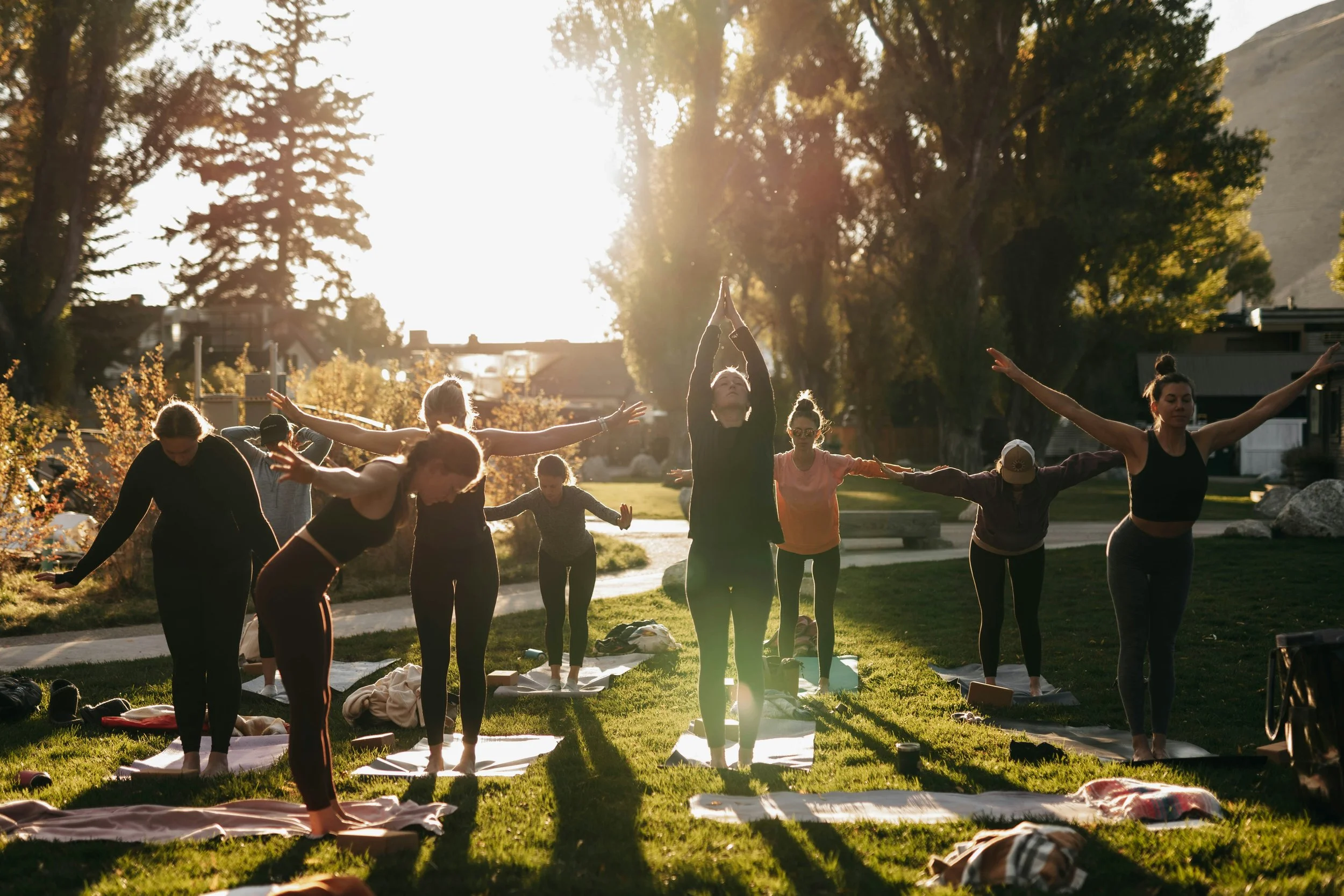
Becoming an Adult Is Harder Than Anyone Told You

Transitioning into adulthood is supposed to be exciting. There are new firsts: your first real job, your first apartment, your first time making your own schedule, your first time realizing that if you don't buy groceries, there will simply be no groceries.
Coming-of-age movies and books have romanticized this period for generations, and I understand why. There is something intoxicating about the possibility of it all. You are young. The world is opening up. You can become almost anyone. Except sometimes it doesn't feel like how it was sold to you.
My own transition into adulthood was a rocky one. At the time, I interpreted the difficulty as a personal failing. Other people seemed to be figuring it out. Why couldn't I? Looking back, I can see something I couldn't see then: how much of my life had been quietly structured around me, holding me up.
When the Structure Suddenly Disappears
For many of us up until this point there is a remarkable amount of structure. Your schedule is largely decided for you. Your friends are nearby and you see them every day without making plans. There are built-in opportunities to exercise, regular healthy meals, extracurriculars, teachers, coaches, parents. Even the people around you are moving through roughly the same stage of life. Then graduation happens, and much of that disappears at once.
It is a little like launching a rocket. The structures that supported it on the ground retract, and suddenly it is being pushed upward with an enormous amount of force. It is not a graceful process. Neither, I think, is becoming an adult.
Suddenly, everything becomes something you have to actively manage. Making friends. Creating a schedule. Eating well. Sleeping enough. Exercising. Managing money. Going to school or work. Maintaining relationships. Figuring out what you actually want to do with your life. There is no longer a single structure holding all of these things together. And there is no universal timeline, either.
“You’re not behind. You’re learning how to build your own scaffolding.”
Everyone Seems to Be Moving at a Different Speed
Before graduation, most of us move through life more or less together. Grade by grade. Year by year. Then everyone scatters. One person is thriving at university, another is working, another has moved across the country, another is living at home, another seems to have their entire future mapped out. It can be difficult not to look sideways and wonder whether you're falling behind. This is where things can get painful.
When so many parts of your life become your responsibility at once, eventually something gets dropped. Maybe your grades slip. Maybe you're not a particularly good friend for a while. Your sleep gets strange. You stop exercising. You're eating whatever is easiest. You're constantly trying to catch up. And then you have evidence. I'm bad at this. But maybe you're under-resourced. There is a difference.
There is something almost unfair about expecting a person to independently manage a life that, until very recently, was being supported by an entire network of people, routines, institutions, and relationships.
When Mental Health Enters the Picture
Sometimes this distress is compounded by the reality that young adulthood is also a common time for mental health disorders to first emerge. In a large systematic review and meta-analysis, researchers found that nearly two-thirds of people with a mental disorder experienced its onset by age 25 (Solmi et al., 2022).
Sometimes the person who is trying to build a new life is also trying to understand why they suddenly don't feel like themselves. Anxiety may become harder to manage. Depression may emerge. Concentration may become difficult. Emotions may feel bigger or less familiar. Something that was manageable before may suddenly not be.
If you hadn’t truly anticipated such a high level of change, or believed it would be as sexy as it was portrayed, it would be easy to interpret the change as another personal failure.

Building Your Own Scaffolding
What I wish someone had told me is that fundamental to becoming an adult is building back your own scaffolding. Sometimes that is practical: creating routines around sleep, meals, exercise, school, or work. Sometimes it's learning how to manage time and responsibilities without constantly feeling like you're underwater. Sometimes it means figuring out how to make friends when friendship is no longer built into your day.
And sometimes the scaffolding you need is more personal. You might be trying to understand why your emotions feel so intense, how to communicate what you need, or how to set boundaries with your family as your relationship with them changes. You might be questioning who you are, what you want, or whether the path you've been following is actually yours. You might be struggling in a relationship, comparing yourself constantly to other people, or feeling paralyzed by decisions about the future.
How Counselling Can Help
These are some of the things we can work through in counselling.
Sometimes a young adult comes in knowing exactly what they want to work on. More often, they simply know that something isn't working. They feel overwhelmed, stuck, disconnected, or like everyone else received instructions that somehow never arrived.
Counselling can provide a place to slow things down and look at the pieces. We can figure out what is actually contributing to the problem, what patterns may be keeping you stuck, and what needs attention first. We can work on emotional regulation, relationships, boundaries, self-worth, coping skills, decision-making, school or work stress, or simply making sense of a period of life that feels much more complicated than you expected.
And sometimes, the first thing counselling provides is simply somewhere to be completely honest. Somewhere you don't have to make everything sound fine.
For me, that was an important part of rebuilding my own scaffolding. I didn't realize it at the time, but seeking counselling gave me the space to be honest about what was happening and figure out what I needed to move forward.
You Are Not Behind
If you're in the middle of this transition and finding it harder than you expected, I hope you can resist the urge to make that difficulty mean something about who you are. You may not be behind. You may not be bad at adulthood. You may simply be learning how to build a life that used to come with more structure than you realized. And that is a lot to learn.
If you're in Vancouver and this feels a little too familiar, I'd be happy to talk with you.
To learn more or book a free consultation, click here.
A note for young adults: Depending on your extended health plan, you may still be covered under a parent's benefits until age 25. Coverage varies by plan, so it's worth checking your specific policy. Watermark Counselling also offers direct billing to many extended health providers, meaning we bill the insurer directly for the covered portion and charge you only the remainder.
References
Solmi, M., Radua, J., Olivola, M., Croce, E., Soardo, L., de Pablo, G. S., Shin, J. I., Kirkbride, J. B., Jones, P., Kim, J. H., Kim, J. Y., Carvalho, A. F., Seeman, M. V., Correll, C. U., & Fusar-Poli, P. (2022). Age at onset of mental disorders worldwide: Large-scale meta-analysis of 192 epidemiological studies. Molecular Psychiatry, 27, 281–295. https://doi.org/10.1038/s41380-021-01161-7

Additional blog posts